If you work with data and want to access, edit and collect it online in one place, you need a database tool. If you don’t run your own infrastructure, you tend to reach for a provider like Airtable. Airtable is the best known product on the market.
Today I am looking at what one of its European competitors can do: the product of the Dutch company Baserow.
Use cases
For me personally, Baserow is a good Google Sheets alternative for collecting data.
Here is the scenario: I publish an online survey (as you know, I like using Tally, and so I did here). Once people have filled in the survey, the data goes straight to Baserow through an integrator. The information from the survey then shows up in the Baserow database. The screenshot gives you an example of such a collection: I can see who got in touch when, about which product, and with which problem.

There are various follow-on scenarios for the data you collect. You can gather customer records in Baserow, for example, and attach cases to them. Sounds like a customer support tool? Yes, that’s right. Up to a certain size you can use Baserow as a CRM as well.
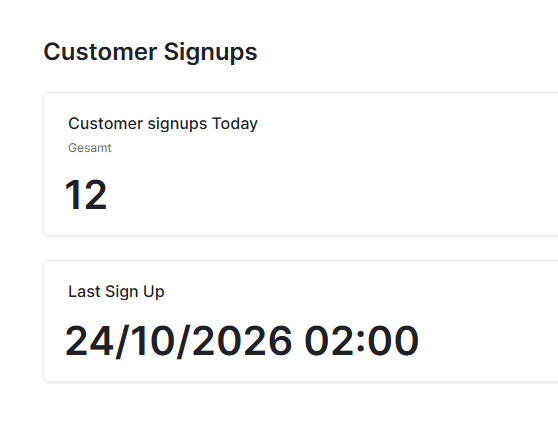
Another use case is to keep an eye on new customer registrations and to send a Slack message or an email after every signup. And this is how it could work: A webhook pushes the new registrations into Baserow (exactly like in the scenario with the form). The signups are then visible on a dashboard inside the app, which can display the aggregated data from the tables. That way you see the number of new customers per day at a glance. On top of that, the automation features inside Baserow let you model simple processes. Examples: sending a Slack message to a team channel for every new customer, or sending an email.
Baserow itself promotes the “project management” scenario. To understand the system, it is worth taking a closer look at this template. This use case explains how the tables depend on each other, and it gives you a good sense of the options the tool brings along.
What the app can (and can’t) do
Baserow offers plenty of free features that cover a good range of use cases. You do have to be willing to pay for a subscription to use some of the extensions, especially when it comes to presenting data. The dashboard I described above in particular is fairly limited on the free plan (only aggregated data, no bar charts, etc.). And it is worth paying a few euros a month for a good product, because that is what keeps small, independent teams going. More on that in the next section.
Free plan or paid plan, Baserow can do a lot. We have already looked at these areas above:
- Database
- Dashboards
- Automations (sending emails, for example)
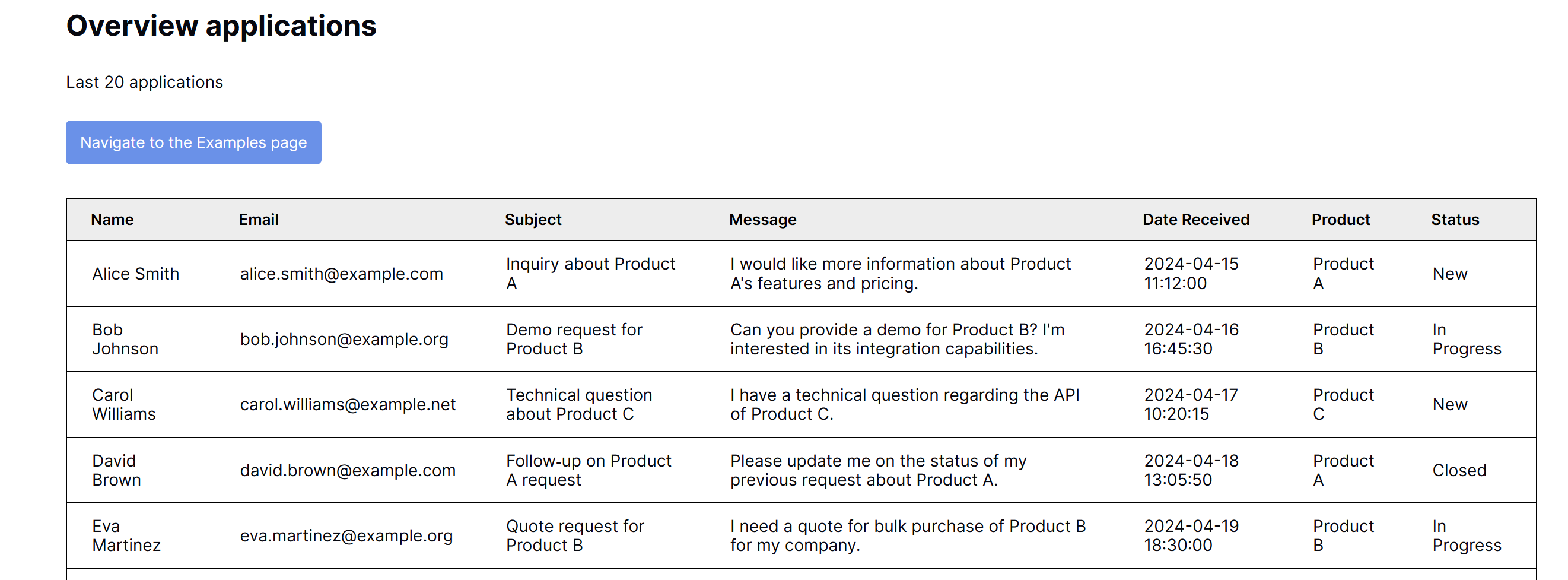
More features come on top, such as the option to build an “app”. That is an interactive dashboard which people outside of your Baserow account can access too. Baserow provides a link for it that you can share with the relevant group of people.
You can of course upload data in all sorts of formats (CSV, JSON, XML, etc.). There are ways to sort the data and to assign fields to particular data types, as you would expect from a database. There is a wide choice of field types: email addresses, ratings, passwords, simple field validation. I will point at the project management template again, because it shows off a lot of what the product can do.
And that brings us straight to a central drawback: Baserow is not Google Sheets, it is an extended database tool. The first steps are very easy, but complex formulas and calculations get harder. That is fine, though, Baserow does not necessarily replace your spreadsheet. What it is very strong at is linking different tables together and presenting them well. So it can absolutely replace several tools, if you are willing to invest a bit of time. But it takes discipline and good processes, as multi-purpose tools always do. Otherwise you get lost in all those tables and dependencies before long.
About Baserow
The product and the company have fascinated me for a long time, in all sorts of ways. Baserow B.V. is based in Amsterdam (Netherlands) and started as a small side project in 2019 that became a company in 2020. Baserow is not bootstrapped: in July 2022 the company raised 5 million euros, led by the Amsterdam investor Inkef. There has been no further round since, and the company has not been sold either.
By its own account Baserow is fully remote and employs fewer than 20 people. That is a remarkably efficient team given how mature the product is. You could also explain the quality by pointing out that the free parts of Baserow are open source (MIT license), so a large part of it develops together with the community. That has certainly played its part, but in my view there is more to it: Baserow’s product is well organised, not overloaded, clearly structured. That speaks for a very good, well-thought-out product strategy.
A few more interesting facts that matter from a data protection point of view: Baserow can be self-hosted. But even if you use the hosted online offering, as I do, all data sits on servers in Germany according to the FAQ. Research shows that the provider is AWS. So if you want to be completely sure your data is not held by a US corporation, self-hosting is worth considering.
Final thoughts
Baserow is a European company, it comes out of the Netherlands, and it uses infrastructure located in Germany. But much like Tally, that is not part of their brand. Only once you dig into the FAQs do you find out where the company is based at all. The team members are spread around the world. And they use AWS as their provider. Digital sovereignty is clearly not front and centre for them.
But is that even a problem? I think what matters more is recognising what this team has achieved. Remotely, with only a few people, they built a remarkably well-thought-out and well-documented tool for many use cases, and it is not technically trivial. Even so, they managed to make it easy to use with an intuitive interface.
With premium features that make sense they have also created solid reasons to pay for Baserow, even if you host the product yourself. But you can use the free open-source product at no cost as well. That is a fair deal.
Personally I really enjoy working in Baserow. And I keep being pleased when I discover new functions and possibilities. The product makes a lot of sense if you want to collect data that you then want to link up and visualise. The automation options can take a lot of manual work off your hands on top of that. But it does not replace a spreadsheet application for complex tasks.